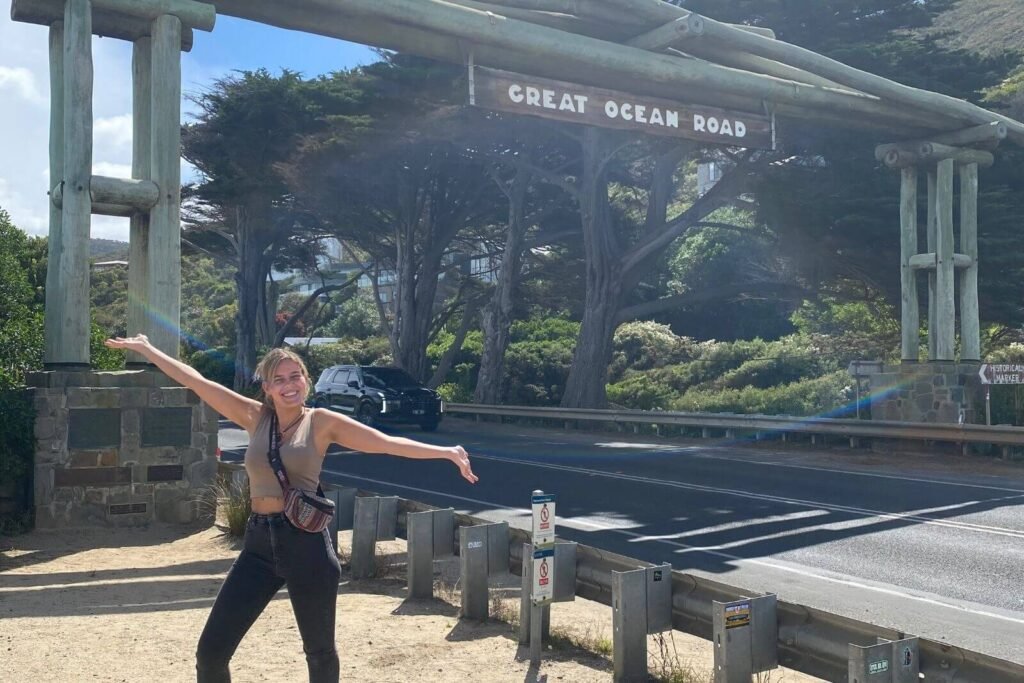
Australia is the only country that covers an entire continent and most of its most breathtaking places are nowhere near a bus stop. The outback, the red centre, the remote coastal stretches that don’t appear on tourist maps: if you want to see the real Australia, you need your own wheels.
I learned this fast. When I arrived for my first backpacking adventure, the sheer scale of distances between cities genuinely caught me off guard. Public transport gets you between the major cities. Everything else, the sunrises over Uluru, the empty highways through the Kimberley, the farm towns where seasonal work actually is require a vehicle.
This guide covers everything: what type of vehicle to buy, where to find it, how to navigate the legal requirements, what to check before you hand over your cash, and the mistakes I made so you don’t have to. Including the time I tried to buy a car, my card got retained by an ATM, and I ended up living out of a vehicle I hadn’t technically paid for yet, with my passport in a stranger’s hands. But we’ll get to that.
1. Understanding Your Vehicle Needs as a Traveler
Before you start searching listings, be honest about what your trip actually looks like. The right vehicle for a coastal road tripper is completely different from the right vehicle for someone doing remote farm work in Queensland or a trip into the red center.
How Long Are You Staying?
For shorter trips of a few months, prioritize something cheap to buy, cheap to run, and easy to resell. For longer adventures of six months to a year or more, reliability and comfort start to matter more — you’ll be living out of this thing.
Urban Driving vs. Outback Adventures
If you’re sticking to cities and coastal towns, a small fuel-efficient sedan is perfectly adequate. If you’re heading into remote areas and in Australia, remote really means remote, you need something with ground clearance, a reliable engine, and ideally four-wheel drive. Breaking down 300km from the nearest town is not a fun experience.
| Terrain / Use | Recommended Vehicle | Key Features |
|---|---|---|
| Urban / Coastal | Sedan or Hatchback | Fuel efficiency, easy parking, cheap to run |
| Outback / Remote | 4WD (Landcruiser, Patrol) | High clearance, durability, storage space |
| Mixed / Everything | Station Wagon or SUV | Versatility, comfort, moderate fuel cost |
| Long-term Living | Campervan / Converted Van | Sleep in the back, freedom, higher upfront cost |
2. Setting a Realistic Budget
The purchase price is just the beginning. Before you commit to any vehicle, understand the full cost of ownership.
- Purchase price — varies massively depending on type and condition
- Rego (registration) — mandatory, varies by state, typically AUD 300–800/year
- Roadworthy / Safety Inspection — AUD 40–100 depending on state
- Insurance — at minimum CTP (compulsory third party); comprehensive is strongly recommended
- Fuel — a major ongoing cost, especially for larger 4WDs on long distances
- Maintenance and repairs — budget for the unexpected, especially with older vehicles
- Resale — if you plan to sell before you leave, factor this into your decision from day one
💡 Pro tip: before accepting any role or buying any vehicle, build a simple monthly budget , purchase costs, rego, insurance, fuel, food, accommodation. That number tells you exactly how many hours of work you need to make it worth it.
3. Private Seller vs. Dealership — The Most Important Decision
Before you decide what to buy, decide where to buy. This choice affects price, risk, and how much homework you need to do.
Option 1: Private Seller or Fellow Backpacker
This is how most backpackers buy their car in Australia and for good reason.
- Prices are typically 30–40% cheaper than at a dealership
- Much more room for negotiation
- Best platforms: Gumtree and Facebook Marketplace
- You can often find backpackers selling at the end of their trip, who are motivated to sell quickly and may include extras like camping gear, roof racks, or a full service history
The downsides:
- No guarantee — what you see is what you get
- The vehicle may have hidden issues
- Always get a pre-purchase mechanical inspection (around AUD 100 / approx. €70) — this is non-negotiable if you don’t know cars
Option 2: Licensed Dealership
Dealerships won’t sell you a car that isn’t roadworthy, and most offer some form of warranty for the first 1,000–10,000km. That peace of mind has a price though.
- Prices are typically 30–40% higher than private sellers
- Little to no room for negotiation
- Better consumer protections if something goes wrong
💡 My recommendation: go private, but always get the mechanical inspection. AUD 100 for a mechanic is the best insurance you can buy before handing over cash.
4. Which Vehicle Should You Actually Buy?
Campervans and Converted Vans — Toyota Hiace, Mercedes Sprinter
The ultimate freedom vehicle. Sleep in the back, park up wherever the rules allow, and skip accommodation costs entirely. The Hiace and Sprinter are the two most common conversions you’ll find on the backpacker market. Higher upfront cost, but can save significant money on accommodation over a long trip.
Station Wagons — Subaru Outback, Holden Commodore
A great middle ground for backpackers who want to cover both urban and rural Australia without committing to a full 4WD. Comfortable, practical, and manageable running costs. Not ideal for serious off-road terrain.
Four-Wheel Drives — Toyota Landcruiser, Nissan Patrol
The gold standard for remote Australia. Bulletproof reliability, genuine off-road capability, and a strong resale market. Higher purchase price and fuel costs, but if you’re serious about exploring the outback, nothing else compares.
Budget Sedans — Toyota Corolla, Mazda 3
For backpackers on a tight budget or those sticking to cities and paved roads. Cheapest to buy, cheapest to run, easiest to park. Not suitable for remote or off-road travel.
5. Where to Find Vehicles for Sale
- Gumtree (gumtree.com.au) — the go-to for private backpacker sales
- Facebook Marketplace & Groups— great for last-minute deals from departing travelers
- Carsales (carsales.com.au) — larger inventory, more dealership listings
- Hostel notice boards — underrated, especially in traveler hubs like Cairns, Byron Bay, and Melbourne
- Car markets in Sydney (Chatswood), Melbourne (Dandenong), and Brisbane (Ipswich) — multiple sellers in one place, good for comparing
💡 Join Facebook groups specifically for backpackers selling cars in your target region. Deals move fast and sellers are often motivated. Search ‚[city] backpackers buy sell cars‘.
6. Legal Requirements — What You Need to Know
Documents You Need as a Foreign Visitor
- Valid passport and visa
- Proof of identity
- Australian address (a hostel address works for registration purposes)
- Tax File Number if you’re also working
Rego — Vehicle Registration
Every vehicle in Australia must be registered in the state it’s primarily used in. The Rego covers the mandatory Compulsory Third Party (CTP) insurance, this covers personal injury to others in an accident, but does NOT cover damage to vehicles, including your own. You and your car are not covered under CTP alone.
Rego can be purchased for 3, 6, or 12 months and renewed at any time. Costs vary by state and depend on the vehicle’s engine size, weight, and fuel type. Always check that the Rego is current before buying and confirm how long is remaining.
Roadworthy Certificate
The Roadworthy (sometimes called a Safety Certificate) confirms the vehicle meets the safety standards of the state. It covers: tyre tread, brakes, seatbelts, steering, rust affecting structural integrity, lights, windscreen, and general roadworthiness.
| State | Certificate Name | Validity | Approx. Cost |
|---|---|---|---|
| Queensland | Safety Certificate | 2 months / 2,000km | AUD 90–100 (~€70) |
| New South Wales | Pink Slip (e-Safety Check) | 6 months | AUD 40–60 (~€40) |
| Victoria | Certificate of Roadworthiness | Required for transfer | AUD 100–200 |
| Western Australia | Vehicle Inspection | Required for transfer | Varies |
Transfer of Registration
Once you’ve agreed on a purchase, both buyer and seller go together to the nearest Department of Transport office to transfer the registration into your name. Bring the Roadworthy certificate, proof of identity, and payment for any applicable transfer fees.
7. Inspecting a Used Vehicle — What to Check
Visual Checks You Can Do Yourself
- Bodywork — look for rust, especially in wheel wells, underneath, and around door frames
- Tyre tread depth and even wear across all four tyres
- All lights working — headlights, indicators, brake lights, reverse light
- Windscreen — chips or cracks that could fail a Roadworthy
- Engine oil level and colour (dark black = overdue for a change)
- Coolant level
- Any visible fluid leaks under the vehicle
Service History and Logbook
Ask for the full service history. Regular servicing at the manufacturer’s recommended intervals is a very good sign. A vehicle with no service records is a risk.
PPSR Check
A Personal Property Securities Register (PPSR) check confirms the vehicle has no outstanding finance owing and hasn’t been reported stolen. This costs around AUD 2 and can save you from buying someone else’s problem. Do it before every private purchase.
Pre-Purchase Mechanic Inspection
If you’re buying from a private seller and you’re not confident about the vehicle’s condition — get a mechanic. Around AUD 100 for a thorough pre-purchase inspection. Worth every cent.
8. The Test Drive — What to Look and Listen For
- Unusual noises — grinding, squealing, clunking at any speed or when braking
- Vibrations when accelerating or at highway speed
- Brake feel — responsive and firm, not spongy or pulling to one side
- Steering — no excessive play, no vibration through the wheel
- Test on a mix of roads if possible — urban, highway, and ideally some rougher surfaces
- All electronics — air conditioning, heating, windows, audio, indicators
- Check that all warning lights go off after starting the engine
9. Negotiating the Best Price
Always research the market value of the vehicle before you make an offer. RedBook (redbook.com.au) and CarsGuide (carsguide.com.au) give you a realistic price range based on make, model, year, and mileage.
Any issues you find during the inspection are legitimate negotiation points. High mileage, worn tyres, a needed service, or cosmetic damage, all of these justify a lower offer. Make a reasonable first offer, expect a counteroffer, and stay calm. Most private sellers expect some negotiation and have priced their vehicle with a small margin built in.
10. Completing the Purchase — And the Mistake I Hope You Never Make
Let me tell you about one of the most stressful experiences of my entire time in Australia. It all started with trying to buy a car.
I had found the perfect vehicle. Two backpackers were selling it, the price was right, and everything was agreed. I headed to an ATM to withdraw the cash and my card got retained by the machine. Just like that, no access to my money.
Here’s where it got complicated fast. It was Easter in Germany. My German bank was completely unreachable for several days. The Australian banks couldn’t help me — it was an international card from a foreign bank, entirely outside their system. I was stuck, with no cash, a car deal agreed, and two strangers waiting.
What Happened Next Is Something I Will Never Forget
The two backpackers I was buying the car from, people I had only just met, decided to trust me completely. They handed me the keys and let me take the car, on trust that I would pay them as soon as I got access to my money. In return, I gave them my passport as security…
Which, looking back, was not my smartest move. I made this mistake and I got lucky. But luck is not a strategy, and I want to be very direct with you here: your passport is the single most important document you own while traveling abroad. It is not a bargaining chip. It is not collateral. It is your identity, your legal right to be in the country, your way home, and your lifeline in any emergency.
Without your passport in Australia you cannot board a flight, cannot cross any border, cannot access many official services, cannot prove your visa status to authorities, and cannot replace it quickly , the nearest consulate or embassy may be hundreds of kilometres away, and emergency passport replacement takes time, money, and a serious amount of stress.
I handed mine over because I panicked and it felt like the only solution in the moment. I understand why I did it. But looking back, if anything had gone wrong, if those two backpackers had left, lost it, or simply disappeared I would have been stranded in a foreign country without any form of official identity. That is not a recoverable situation in a day or two.
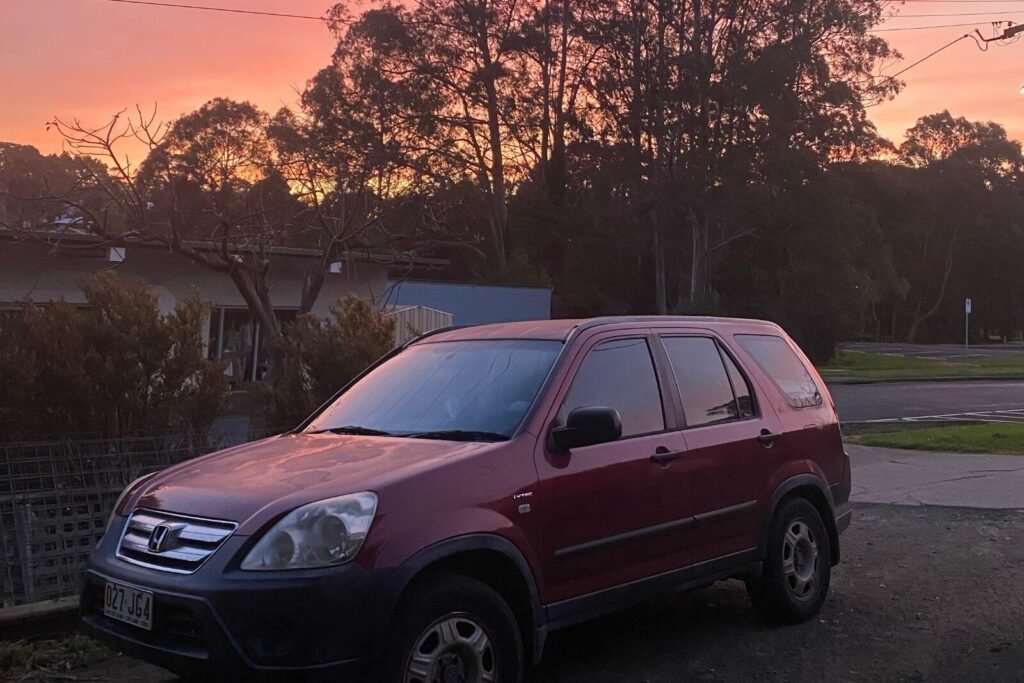
So there I was: living out of a car I hadn’t paid for yet, passport with strangers, bank unreachable, Easter dragging on and only 50 dollars in my pocket…
After endless back-and-forth the solution that finally unblocked everything was my mum. She transferred the money directly to the two backpackers from Germany so I could get my passport back and everyone could move on.
And that introduced the next problem: my mum didn’t have an international bank account. A standard German bank transfer abroad can take several business days to clear. So even once we had a solution, we were still waiting.
In the meantime, I did the only thing I could: I went to an Australian bank and opened a local account. My parents transferred me some money to survive on — just enough to cover the basics while I waited.
But I still had no access to my own money — my German card was blocked, and the bank needed to send me a new one. A card sent from Germany to Australia takes time. A lot of time.
And then came the next problem I hadn’t thought through: to receive my new German card, I needed a fixed address to send it to. But at this moment I was living out of my car. No hostel, no flat, no fixed address.
So I booked myself into a hostel for two weeks. Not because I wanted to spend the money. Because I had no other option.
I waited. The card eventually arrived. And the moment it did, the moment I finally had my money back, my freedom back, and the open road ahead of me, I checked out of that hostel, threw my bags in the car, and went on a road trip.
After everything that had happened, that drive felt like the best thing in the world.
What I Learned — Please Sort These Things Before You Leave Home
- Check your ATM withdrawal limits. International withdrawals often have lower daily and per-transaction limits than you expect. If you need a larger sum for a car purchase, withdraw smaller amounts over several days in advance.
- Give a trusted family member power of attorney for your bank account. This takes about 30 minutes at your local branch before you leave and costs almost nothing. Without it, even your closest family member cannot act on your behalf.
- Make sure someone at home can send money internationally — ideally via Wise or Revolut, which process transfers within hours rather than days. A standard German bank transfer abroad can take 3–5 business days.
- Never hand over your passport as security. Consider alternatives: a written agreement, a copy of your ID, or a small partial payment if possible.
- Think about your address before you leave. The bank eventually needed to send me a new card — but I was living in my car with no fixed address. Arrange a reliable address in Australia for any post before you go.
- Be aware of public holidays back home. German bank holidays — Easter, Christmas, regional holidays — can shut everything down for several days.
💡 I’m sharing all of this because nobody told me any of it. The car purchase itself was fine. It was everything around it that nearly derailed the whole trip. A little preparation at home costs you an afternoon. Not preparing cost me two weeks of stress, my passport in a stranger’s hands, and my mum scrambling to do an international bank transfer from her kitchen table.
11. Insurance and Registration — Getting It All Sorted
Compulsory Third Party (CTP)
Understanding insurance in Australia is crucial — and slightly more complex than in most European countries. Here is a clear breakdown of every level of cover available, from the legally mandatory minimum to the most comprehensive protection.
The Four Levels of Car Insurance in Australia
Australian car insurance falls into four categories: Compulsory Third Party, Third Party Property, Third Party Fire and Theft, and Comprehensive insurance. Here is what each actually covers:
Level 1 — Compulsory Third Party (CTP) Mandatory by law: it is illegal not to have CTP insurance in Australia. It is included in your Rego payment and covers personal injury to other people in an accident. It does NOT cover damage to any vehicle, not yours, not theirs. You and your car are completely unprotected beyond personal injury.
Level 2 — Third Party Property Covers damage you cause to other people’s property in an accident, but does not protect your own vehicle. A step up from CTP alone, and relatively affordable. If you write off someone else’s expensive car, this saves you from a potentially massive bill.
Level 3 — Third Party Fire and Theft Adds coverage for your own vehicle if it is stolen or damaged by fire — but still doesn’t cover collision damage to your own car. Good middle ground if your vehicle isn’t worth much but you want protection against theft.
Level 4 — Comprehensive The most complete option. Covers damage to your own vehicle as well as damage to others‘ property, and often includes additional benefits such as windscreen repair, towing, and coverage for personal belongings inside the vehicle.
⚠️ One thing backpackers often don’t think about: most of your belongings are in your car. Your laptop, your camera, your clothes, everything. If you have expensive items — phones, laptops, passport — getting cover for them might be a wise choice. Check whether your comprehensive policy covers personal contents, or whether you need to add this separately.
12. Maintaining Your Vehicle on the Road
Essential Checks Before Any Long Drive
- Engine oil level and colour
- Coolant level
- Tyre pressure and tread depth
- Brake fluid
- All lights functioning
- Windscreen condition
Preparing for the Outback
- Carry at least 10–15 litres of extra water per person beyond your drinking water
- Pack a basic first aid kit
- Carry a spare tyre (ideally two for very remote routes) and know how to change it
- Basic tools: jumper cables, tyre repair kit, torch, multi-tool
- A satellite communicator like a Garmin inReach for areas with no mobile coverage
- Tell someone your route and expected check-in times before you leave
13. Selling Your Vehicle Before You Leave
The same channels that helped you buy work just as well for selling: Gumtree, Facebook Marketplace, hostel notice boards. Price realistically, a clean, well-maintained vehicle with current Rego and a fresh Roadworthy sells quickly.
Keep all your service records and receipts throughout your ownership. Buyers will pay more for a vehicle with documented maintenance history. Make sure the Rego is current and the Roadworthy is valid these remove the two biggest objections any buyer will have.
FAQ — Buying a Car in Australia as a Backpacker
Can I buy a car in Australia on a Working Holiday Visa? Yes. You can legally purchase and register a vehicle on a Working Holiday Visa. You’ll need a valid passport, visa documentation, and an Australian address.
Do I need an Australian driver’s licence? In most states, you can drive on your home country’s licence for the duration of your visa. Some states require an official translation if your licence is not in English. Better check the actual regulation for each stat.
What is the PPSR check and why does it matter? The PPSR check confirms there is no outstanding finance on the vehicle and it hasn’t been reported stolen. It costs around AUD 2 and takes minutes online. Do it before every private purchase.
What is the difference between Rego and a Roadworthy? Rego is the annual vehicle registration including compulsory third party insurance. Roadworthy is a separate inspection confirming the vehicle is mechanically safe to drive. Both are required, and both vary by state.
How much should I budget for a backpacker car in Australia? For a reliable sedan or small station wagon: AUD 3,000–7,000. For a solid 4WD: AUD 8,000–20,000+. For a converted campervan: AUD 6,000–17,000 depending on the conversion quality.
Is it better to buy or rent a campervan? For trips under 3–4 weeks, rental often makes more financial sense. For longer trips, buying is almost always cheaper. The break-even point is usually around the 4–6 week mark.
Final Thoughts
Buying a car in Australia as a backpacker is one of the best decisions you can make for your trip. It gives you freedom that no bus schedule or tour group can match, the ability to stop when you want, go where you want, and stay as long as you like. Honestly, the roadtrips i did by myself have been some of the best experiences during my whole time in Australia.
Do your research, get the mechanic inspection, sort your banking before you leave home, and don’t hand over your passport to anyone. Learn from my mistakes so you can spend your energy on the open road rather than on back and forth calls with your bank.
Australia is waiting. Get your wheels sorted and go find it.