Some trips you plan carefully. Some trips just happen. My Great Ocean Road adventure was firmly in the second category and it turned out to be one of the best experiences of my entire time in Australia.
The Great Ocean Road winds for 243km along the southwest coast of Victoria, from Torquay to Allansford, combining spectacular coastal scenery with the dense rainforests of the Great Otway National Park. It is consistently ranked among the world’s greatest road trips and after driving it myself, I completely understand why.
This guide covers every major stop in order, practical tips for every budget, and the honest story of how five girls ended up squeezed into one tiny car with a single small cool box and a diet of bread and chips. But more on that later. Let’s start at the beginning.
Before You Go — Practical Information
How Long Do You Need?
You could drive the Great Ocean Road in around 9.5 hours without stops, but that’s far from the ideal way to experience it. Here is a realistic guide:
- 1 day — possible as a day trip from Melbourne, but you’ll need to rush and can only hit the major highlights
- 2–3 days — the sweet spot for most travelers, enough time to stop properly at every must-see
- 4–5 days or more — ideal if you want to hike, explore hinterland waterfalls, and truly soak it in
I spent more than three days and I still felt like I could have stayed longer.
Best Time to Visit
| Season | Weather | Crowds | Best For |
|---|---|---|---|
| Spring (Sep–Nov) | Mild, 15–20°C | Moderate | Perfect balance of weather and space |
| Summer (Dec–Feb) | Warm, 20–28°C | Very high | Beach activities — book everything in advance |
| Autumn (Mar–May) | Mild, 12–20°C | Moderate | Quieter roads, beautiful light for photos |
| Winter (Jun–Aug) | Cool, 7–15°C | Low | Serene and uncrowded — bring layers |
💡 My personal tip: avoid summer peak season if you can. We traveled in high season and finding last-minute accommodation was a genuine challenge — more on that below.
Getting There and Getting Around
The official starting point of the Great Ocean Road is Torquay, just over an hour’s drive from Melbourne. The best way to experience the road is in your own vehicle: it gives you the freedom to stop whenever you want, stay as long as you like, and discover spots that tour buses fly straight past.
🚗 Need a rental car? I recommend comparing options on Rentalcars.com— it searches across multiple providers so you always find the best rate for your dates.
If you don’t want to drive, organised tours from Melbourne are available and cover the main highlights in one or two days. Check GetYourGuide for well-reviewed options at transparent prices.
Where to Stay
Accommodation along the Great Ocean Road ranges from basic campsites to boutique hotels. For backpackers, hostels and cabin-style campsites in towns like Lorne, Apollo Bay, and Port Campbell are the best value.
🏠 For finding accommodation across Australia, I use both Booking.com and Hostelworld— they complement each other perfectly. Booking.com is my go-to for filtering by weekly rates, kitchen access, and longer stays. Hostelworld is where I go when I want to connect with other travelers. And book ahead in summer — trust me on this one.
My Personal Story — Five Girls, One Tiny Car, and a Very Small Cool Box
Before we get into the stops, let me tell you how my Great Ocean Road trip actually happened.
I had been in Melbourne for a couple of days when I joined a day trip to Phillip Island. On that trip I met four girls who were planning to drive the Great Ocean Road the next day three of them had organised the trip together and one had also spontaneously joined, just like me. We got on so well on the Phillip Island trip that they invited me to come along.
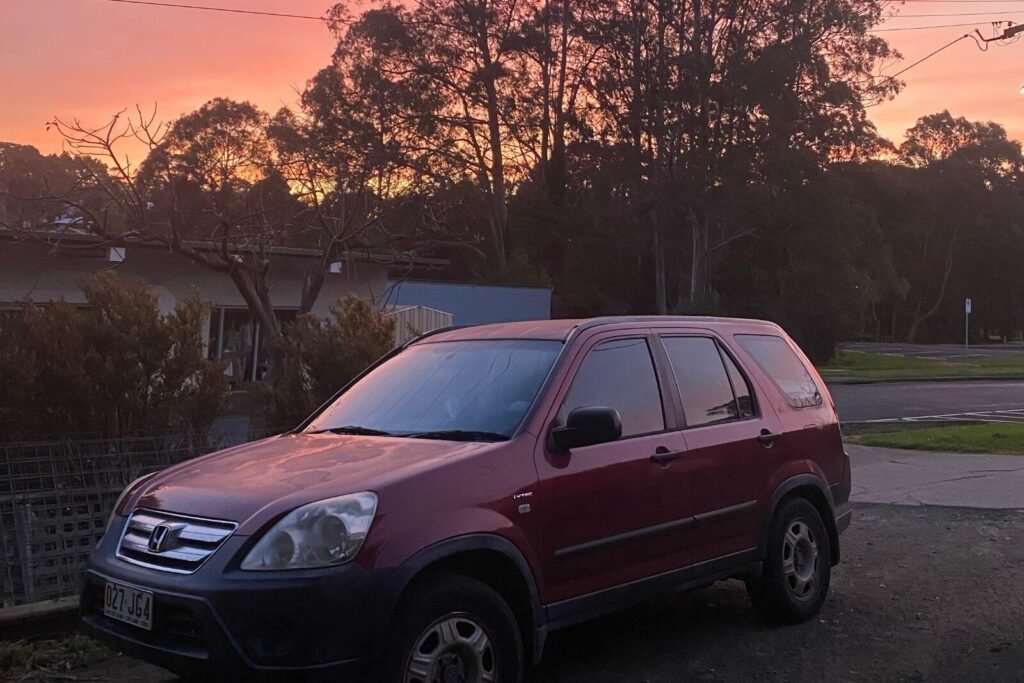
The original plan was for three people. By the time we set off we were five. In a small car that was already packed to capacity.
I am not exaggerating when I say we used every single centimetre of that car. Bags were piled on top of us. Backpacks were wedged into every gap. At various points three of us were squeezed together across the back seat with gear on our laps, under our feet, and somehow also above our heads. We couldn’t move, but we were laughing the entire time.
Our food situation was equally creative. We had one small cool box between five people, and because we were all trying to travel as cheaply as possible, our diet for the majority of the trip consisted of bread and chips. That’s it. Bread. And chips. Occasionally with some dips from the cool box if we could reach it under three layers of luggage.
We had originally planned for three days and had booked hostels and cabin campsites accordingly. But we were having such a good time and the road was so beautiful that we decided to keep going. The problem: it was high season. There was nothing left to book.
So we bought a tent.
Three people slept in the tent each night, rotating through the trip. The other two slept in the car — one on the driver’s seat, one on the passenger seat. I had two nights in the car. I barely slept either time. By about 5am the Australian sun had already turned the car into an oven and sleep was no longer an option.
But here is what I didn’t expect: those early mornings became my favourite part of the whole trip.
Unable to sleep, I would quietly get out of the car while everyone else was still out cold, and walk down to the beach alone. The light at that hour along the Great Ocean Road coastline is something that’s genuinely hard to describe: golden, soft, completely still. And almost every morning, I met someone. An Australian out walking their dog, a local fisherman, a couple watching the sunrise. Without exception, every single person stopped to chat.
„Hey, what are you up to?“ „Oh, I’m travelling with some friends, doing a road trip.“ „Nice! Which stops have you done? Have you been to…?“ and so on…
And then ten minutes of genuine, warm conversation with a complete stranger, recommendations, stories, questions about where I was from. I have travelled a lot, and I have never experienced that kind of easy, open friendliness quite the way I did in Australia. Those quiet morning beach conversations with locals I will never see again are somehow among my most vivid memories of the entire country.
The Great Ocean Road — Every Stop In Order
Starting Point: Melbourne / Torquay
Torquay, about 100km and 1 hour 20 minutes from Melbourne, is considered the home of Australian surfing. It’s a lively surf town with great cafés, surf brand outlets, and the Australian National Surfing Museum if you want to dive into the history. It’s a nice place to start slowly, grab a coffee, and get into road trip mode.
Nearby: Bells Beach — Australia’s most famous surf beach, host of the annual Rip Curl Pro contest each Easter. Worth a quick stop for photos even if you’re not a surfer.
Stop 1: Great Ocean Road Memorial Arch
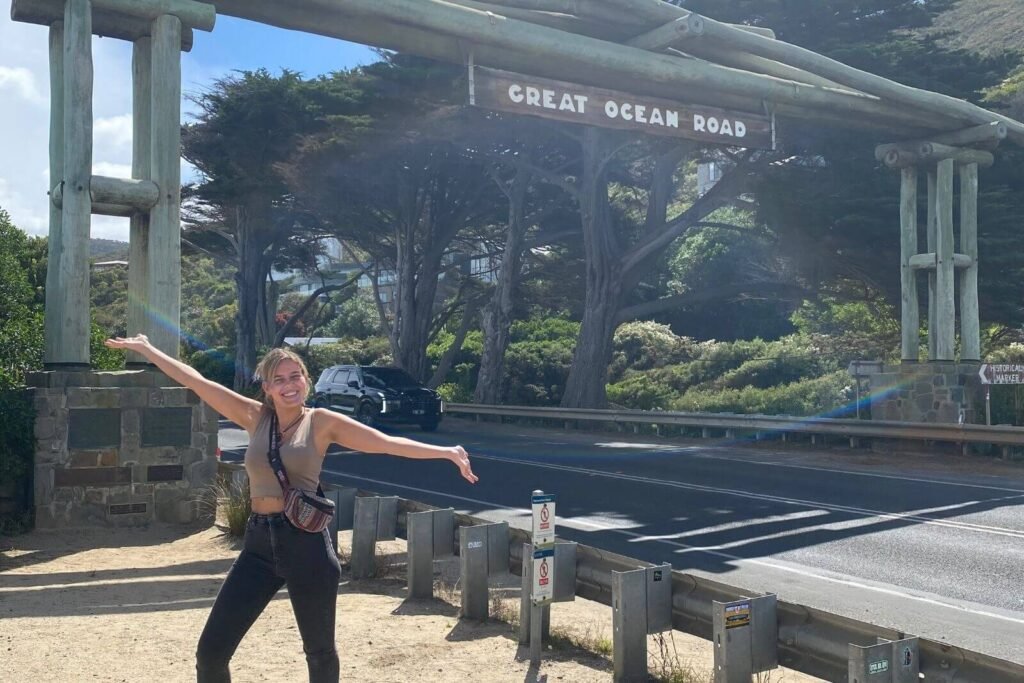
The Memorial Arch is dedicated to the soldiers who built the road after WWI and has become a favourite photo spot for visitors. There’s a dedicated parking area to the left of the wooden arch. It’s the classic „proof you were here“ photo — quick stop, five minutes, absolutely worth it.
Stop 2: Point Addis National Marine Park
Climb to the top of the rugged cliffs on the Koori Cultural Walk and look out over sweeping panoramic views of the ocean below. One of the less-visited spots on the road, which means you might actually have the viewpoint to yourself. A rare thing on the Great Ocean Road.
Stop 3: Lorne — Best Lunch Stop on the Road
Lorne is the most popular and coolest spot on the Great Ocean Road. The trendy coastal town has boutique shops and cafés along the main street, and the beach in front of town is often packed with visitors on weekends.
This is the ideal lunch stop. Grab a classic Aussie burger, sit by the water, and take your time. If you’re on a tighter schedule, at least stop for a coffee — Lorne deserves more than a drive-through.
Nearby: Erskine Falls — a beautiful 30-metre waterfall just a short drive from town. Well worth the detour if you have time.
Stop 4: Lorne Queenscliff Coastal Reserve
A quieter stretch of coastline just beyond Lorne with stunning views and far fewer tourists. Perfect for a walk and a moment of calm before the road gets busy again further west.
Stop 5: Kennet River Koala Walk
Kennett River has become known as one of Australia’s koala-spotting capitals, thanks to the large numbers of these native animals that make their home in the blue gums lining the main road.
This was one of my personal highlights of the entire trip. You simply park, look up into the trees, and there they are: koalas, completely wild, going about their day as if you’re not even there. No zoo, no enclosure, no ticket. Just eucalyptus trees full of sleeping koalas. We stood there for a long time watching these cute animals.
💡 Go early morning or late afternoon for the best sightings — koalas are most active at these times. During the middle of the day they sleep deeply and can be harder to spot.
Stop 6: Apollo Bay
Apollo Bay is known for its postcard beaches, supreme surf, fresh seafood, and being the gateway to the Great Otway National Park. It’s also the last proper town before the road gets more remote heading west, stock up on supplies here.
The scallop pie in Apollo Bay is an absolute must-try. If you do nothing else here, find a scallop pie.
Stop 7: Great Otway National Park
Made up of 103,000 hectares of rainforest, beaches, waterfalls and heathlands, Great Otway National Park is also a great place to spot koalas on the Great Ocean Road. Beyond wildlife, the park contains some of the most dramatic scenery on the entire route.
Don’t miss:
- Cape Otway Lightstation — the oldest surviving lighthouse building on mainland Australia. Pre-book if you want to climb the tower.
- Maits Rest Rainforest Walk — a beautiful 1km loop through ancient rainforest. Easy, short, and genuinely magical.
- Otway Fly Treetop Walk — a treetop walkway and zipline for those who want something more adventurous.
Stop 8: Mariners Lookout
Pull over and look back. From Mariners Lookout you get a panoramic view of the coastline you’ve just driven: the ocean stretching out in both directions, the road winding below. One of those stops that makes you feel the full scale of the journey you’re on.
Stop 9: Hopetoun Falls
Just a 15-minute drive from Beech Forest, Hopetoun Falls plummets 30 metres into the stream below. You can marvel at it from the viewpoint above or walk through the forest ferns to see and hear the full force of the falls up close.
One of the most photogenic spots on the entire road. The contrast between the dense green rainforest and the white rush of water is extraordinary. Take the walk down the viewpoint from above doesn’t do it justice.
Stop 10: Beech Forest & Wyelangta
Two quiet hinterland communities surrounded by towering trees and walking trails. Hopetoun Falls is just a 15-minute drive from Beech Forest , so combine them easily into the same stop. Wyelangta has some excellent longer hiking trails if you want to stretch your legs properly.
Stop 11: The Shipwreck Coast — Where the Road Reaches Its Peak
From here west, the landscape shifts dramatically. The coastline becomes rawer, the cliffs higher, the ocean angrier. This is the Shipwreck Coast, named for the hundreds of vessels lost along this stretch over the centuries. Every stop from here to Warrnambool is extraordinary.
Stop 12: Peterborough & Bay of Islands Coastal Park
The Bay of Islands is like a preview of the Twelve Apostles, dramatic limestone stacks rising from the surf, but with a fraction of the crowds. Walk to the Wildlife Viewing Platform for a chance to spot local wildlife against a backdrop of extraordinary rock formations. If you’re short on time, this is a hidden gem that most people drive past without stopping.
Stop 13: Bay of Martyrs
Breathtaking views of the ocean and surrounding cliffs. One of the best photography spots on the entire road, particularly in the late afternoon light when the limestone turns golden. Relatively quiet compared to the major attractions nearby.
Stop 14: The Grotto
A natural limestone cave accessible via a staircase, where a small opening frames a perfect circle of ocean below. It sounds simple, it looks extraordinary. A short stop, but one that stays with you.
Stop 15: London Bridge
A natural rock formation that once resembled a double-arched bridge, until 1990, when the outer arch collapsed, stranding two tourists on what was suddenly an island. They had to be rescued by helicopter. Today only one arch remains, but the formation is still dramatic and the story still remarkable.
⚠️ The area is prone to rockfalls — stay on the designated viewing areas and don’t climb on the formations.
Stop 16: Prady’s Lookout & The Bakers Oven
Two viewpoints that deliver some of the best sunset views on the entire road. If your timing works, position yourself here for golden hour. The light on the cliffs and the ocean at this time of day is unforgettable.
Stop 17: Loch Ard Gorge Beach
Loch Ard Gorge is named after the Loch Ard ship that ran aground in June 1878, coming to the end of a three-month voyage from England to Melbourne. Of all those onboard, only two survived.
The gorge itself is a narrow inlet of turquoise water enclosed by towering sandstone cliffs. Walking down to the beach feels like discovering somewhere that was never meant to be found. The combination of the history, the geology, and the sheer visual drama of this place makes it one of the most memorable stops on the entire road.
Just a short walk away is Thunder Cave: formed over 20 million years, a lesser-known gem that most visitors miss entirely.
Stop 18: The Twelve Apostles
The Twelve Apostles are the most iconic section of the whole Great Ocean Road route. These towering limestone stacks are over 45 metres high and were created over 20 million years ago. Only eight of the original twelve are still standing.
This was my other personal highlight — and standing there in person, I understood immediately why. Photos do not prepare you for the scale of these formations or for the sound of the Southern Ocean crashing against them. It is genuinely one of the most powerful natural spectacles I have ever seen.
💡 Most important tip for the Twelve Apostles: the middle of the day is when tour buses arrive and the viewing platforms fill up fast. If you can, time your visit for sunrise or sunset: the limestone stacks turn deep shades of orange and pink as the sun drops toward the Southern Ocean, and the light on the water is unlike anything I have ever seen. We arrived as the crowds were thinning in the late afternoon and stayed until the last light faded. That hour at the Twelve Apostles as the sky changed colour above those ancient rock formations is one of the moments from Australia I will carry with me for the rest of my life.
🌅 For an utterly unforgettable perspective, helicopter tours over the Twelve Apostles are available from the nearby helipad. Book through GetYourGuide for the best prices and reviews.
Stop 19: Childers Cove — The Hidden Gem
If you loved the Twelve Apostles, Childers Cove is another to add to your list. Perched metres from the white-sand beach are limestone cliffs standing up to 70 metres high above the ocean — a junior Twelve Apostles essence, minus the crowds. Visit at low tide and bring your camera.
End Point: Warrnambool
Warrnambool is well-known for its wildlife wonders, from the native animals at Tower Hill Wildlife Reserve to the thousands of whales that pass by Logan’s Beach every winter. It’s also home to the Flagstaff Hill Maritime Museum — a fascinating tribute to the Shipwreck Coast’s extraordinary history. A worthwhile final stop before turning around or continuing west.
Budget Tips for the Great Ocean Road
Food: We survived on bread and chips, which I would describe as effective rather than enjoyable. A better budget strategy: stock up at a supermarket in Melbourne or Torquay before you leave. Bring a proper cool box, basic cooking supplies if you’re camping, and save the restaurant meals for one or two special stops. For example: Apollo Bay’s scallop pie or a lunch in Lorne. Everything in between can be self-catered for a fraction of the price.
Accommodation: Book as far in advance as possible, especially in summer. If you get caught out like we did: no availability, peak season, last-minute decisions — be prepared for campsite ground pitches only. Having a tent and the flexibility to improvise genuinely saved our trip. The WikiCamps app is excellent for finding free or low-cost campsites along the route.
Fuel: Fill up in the major towns: Torquay, Lorne, Apollo Bay, Port Campbell. Fuel in smaller stops between these towns can be significantly more expensive.
Entrance fees: Most of the major attractions along the Great Ocean Road are free. The Twelve Apostles, Loch Ard Gorge, London Bridge, the Grotto, all free. The main exceptions are some activities within the national park and the Cape Otway Lighthouse tower tour.
FAQ — Great Ocean Road
How long is the Great Ocean Road? The Great Ocean Road spans 243 kilometres from Torquay to Warrnambool along the southwest coast of Victoria.
Can I do the Great Ocean Road as a day trip from Melbourne? Technically yes, but you’ll be rushed and will only reach the first half of the road. For the full experience including the Twelve Apostles and Shipwreck Coast, plan at least two nights. Three or more is better.
Do I need to book accommodation in advance? In summer — absolutely yes. In shoulder seasons, a few days‘ notice is usually enough. In winter you can often be spontaneous. Learn from my experience: don’t assume you’ll find something last minute in December or January.
Is the Great Ocean Road suitable for campervans? Yes, and it’s one of the best ways to do it. There are numerous campsites and many free camping spots. Download the WikiCamps app before you go.
What are the best stops on the Great Ocean Road? The Twelve Apostles at sunset and the Kennet River Koala walk. No contest.
Final Thoughts
The Great Ocean Road gave me koalas in the wild, the Twelve Apostles at golden hour, early morning beach walks with friendly strangers, and four travel companions I met by accident the day before. It gave me mornings that started uncomfortably, stiff from a car seat, too hot to sleep — and turned them into some of the most peaceful moments of my year.
It is one of those trips where the unplanned parts become the ones you remember most.
Book your car, pack more food than you think you need, and if someone you just met asks if you want to join their road trip — say yes.
Liked this guide? Check out our other Australia articles: Seasonal Jobs in Australia · How to Buy a Car in Australia ·